Every cycle, the same thing happens. You sign with a dialer in August, the numbers light up green for two weeks, and by mid-September your connect rate falls off a cliff because half your DIDs are flagged as Scam Likely. Now you're paying for a list you can't reach and explaining to the principal why contact rates cratered the week voters started paying attention.
This post is about how to pick a vendor — and a number strategy — that survives the whole cycle, not just the first push. No protocol lectures. Just what to ask, what to watch, and how to keep your cost-per-successful-contact from blowing up in the final stretch.
The real number you're optimizing
Forget per-minute rates for a second. The number that matters is cost per live conversation. A vendor quoting you a cheap per-minute rate doesn't help if 70% of your dials hit a spam label and never connect. You end up burning minutes on dead air and paying anyway.
When you evaluate a vendor, ask them to walk through the math the way you'd actually calculate it:
- Dials attempted
- Calls that actually rang (didn't get blocked or labeled)
- Calls answered
- Conversations over 30 seconds
- Cost divided by that last number
If they can't produce those numbers from past cycles, they're guessing. Move on.
Why numbers go bad mid-cycle
Carriers and the analytics companies they use (Hiya, First Orion, TNS) score numbers based on call patterns. Short calls, high volume from a single DID, lots of "no answer" hangups — all of it feeds a score that decides whether your next call shows up as your candidate's name, a blank, or "Scam Likely."
A few patterns burn numbers fastest:
- One DID hammering thousands of dials a day
- Calling outside reasonable windows
- Caller ID that doesn't match what the carrier sees on the wire
- Reused numbers from previous campaigns that already got flagged
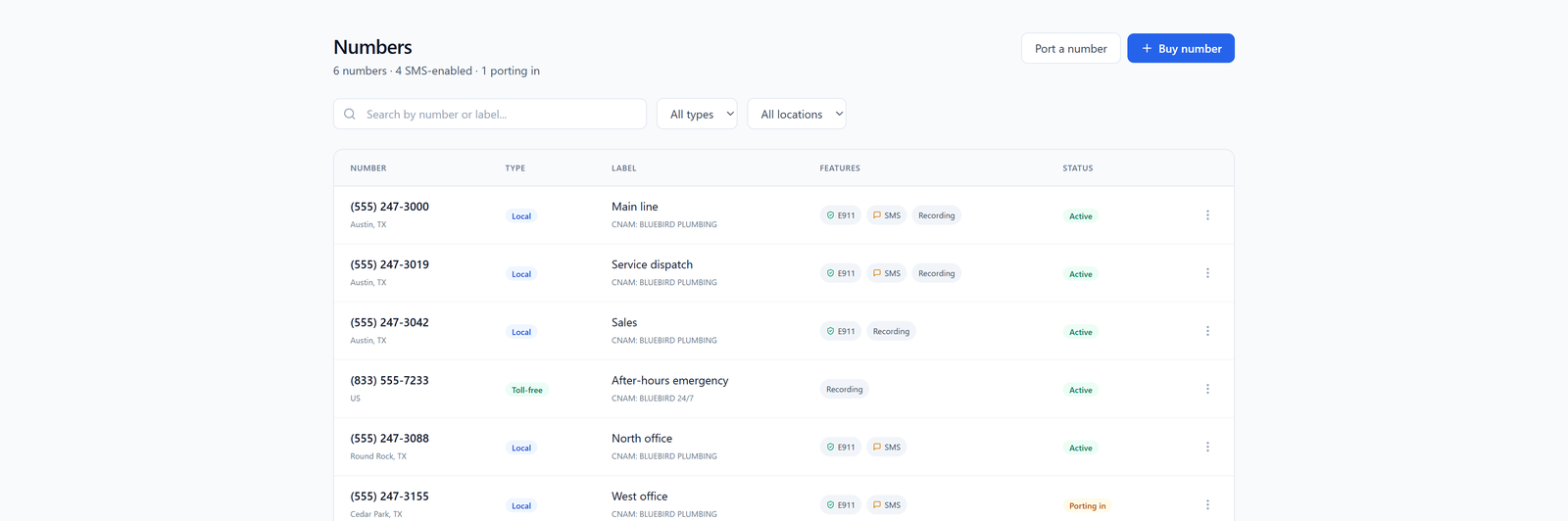
If your vendor's plan is "we have ten numbers and we'll rotate them," you'll be cooked by week two. Real volume needs real DID inventory — hundreds or thousands of clean, rotated numbers tied to legitimate caller ID. That's the whole game for high-volume outbound, and it's why we offer bulk DID inventory specifically for this use case.
Questions to ask every vendor before you sign
Here's the short list. If they dodge any of these, that's your answer.
Where do your numbers come from?
You want to know if they own DID inventory directly or resell from a chain of brokers. Every hop adds a layer where reputation can get muddied — and where you lose visibility when something breaks. Direct relationships are cleaner.
How do you rotate numbers, and how many do I get?
For serious volume you need a pool sized to your dial plan, not a handful recycled aggressively. Ask for the ratio of DIDs to daily dial volume they recommend. If they shrug, they haven't done this at scale.
What's your caller ID registration process?
This is the part where vendors get cagey. The carriers run a system that verifies whether a call's caller ID is legitimately yours. (Plainly: when your call hits the network, the carrier checks whether the number on the screen is one you're actually allowed to use.) If your vendor isn't registering your DIDs properly with the major analytics providers, your numbers will get flagged faster than you can replace them. Ask specifically: do you submit our numbers to Hiya, First Orion, and TNS for vetting?
Can I bring my own numbers, or port out at the end?
If the answer is no, that's a lock-in problem. You want the option to keep clean numbers between cycles or move them if the vendor underdelivers.
What's the rate structure, and what's negotiable on commit?
Don't accept a flat published rate as gospel. Political termination is custom-quoted at volume. Ask for the rate sheet, ask what changes at higher commits, and compare line items across vendors apples-to-apples. (We won't quote numbers in a blog post — that's a quote-by-quote conversation, and so is everyone else's, despite what their marketing says.)
The crowded-vendor problem
The political telecom space is packed with resellers who light up every two years, undercut on price, and disappear after November. Some of them are fine. Many of them are running on someone else's infrastructure with no real control over deliverability, and when something breaks at 6pm on a Tuesday in October, you're on a support ticket queue behind 200 other panicked campaigns.
The operators worth working with usually have a few things in common:
- They run year-round, not just cycles
- They can name the upstream carriers they touch
- They have a human on the phone when something goes sideways
- They've handled volume comparable to or larger than yours before
Ask for references from the last cycle. Actually call them. Ten minutes on the phone with someone who used the vendor last October tells you more than any sales deck.
Timing the buy
The vendors who get the best rates and the best inventory are the ones who lock contracts before the panic starts. By the time GOTV is in sight, every dialer shop is at capacity and you'll be paying spot pricing for whatever scraps are left.
If you're planning a fall push:
- Lock vendor selection by early summer
- Provision and warm up your DID pool 4–6 weeks before you start real volume
- Run a small test campaign before peak to confirm caller ID is rendering the way you expect on the major carriers
- Have a backup termination relationship ready, even if it's just a small commit
That last one matters more than people think. When your primary vendor has an outage on a Saturday in October, you don't have time to onboard somewhere new.
Watching deliverability in flight
Once you're live, monitor it daily. You're looking for:
- Connect rate trending down week over week
- Sudden drops in answer rate on specific area codes
- Numbers showing up as Spam Likely on test calls to your own phones
- Carrier-specific drops (T-Mobile delivery falling while Verizon stays flat, etc.)
If you see any of those, rotate affected DIDs out of the pool immediately and ask your vendor to investigate. A good vendor has tooling to flag this before you do. A bad one waits for you to complain. There's more on this in our political dialer deliverability checklist if you want a flight-check version.
What to do next
Before you sign anything for this cycle:
- Write down your expected dial volume per day, per week, peak week
- Ask three vendors for a quote against that exact volume
- Make each of them answer the questions above in writing
- Reference-check at least one campaign from last cycle
- Build in a backup termination relationship
The campaigns that finish strong in October are the ones that did this work in May. The ones scrambling for new numbers the week before Election Day did not.
If you want to talk through what a DID pool sized to your dial plan looks like, start here — we quote based on actual cycle volume, not a published rate card.