A prospect messages your business at 8:47pm on a Saturday. By Monday morning they've booked with the salon down the street. You didn't lose because you were more expensive or less skilled — you lost because the other shop's number sent a reply in under a minute. That gap is fixable without hiring a VA or buying another monthly tool.
This guide walks through the actual stack: missed-call-to-text, after-hours SMS auto-reply, a booking link that does the qualifying for you, and the 10DLC paperwork that determines whether any of it reaches the customer's phone.
Why the first 60 seconds decide the booking
Lead-response research has been pointing the same direction for years: the business that answers first wins the appointment, even when its pricing is higher. For service businesses — clinics, salons, HVAC, mobile detailers, dog groomers — Saturday and after-hours inquiries are the bulk of new-customer demand. If your phone goes to voicemail and your DMs sit until Monday, you are donating leads.
The goal isn't to fully automate the relationship. It's to acknowledge the lead instantly, give them something useful to do (a booking link, a price range, a service menu), and buy yourself the time to follow up like a human when you're back at the desk.
The three pieces of a same-minute system
You need three things working together:
- Missed-call-to-text — every unanswered call triggers an outbound SMS to that caller within seconds.
- After-hours SMS auto-reply — any inbound text outside business hours gets an immediate response with hours, link, and a promise to follow up.
- A booking link that closes the loop — Calendly, Cal.com, Square Appointments, Vagaro, whatever your industry uses. The auto-reply must point here.
The stack is intentionally boring. The leverage isn't in fancy AI — it's in the fact that the customer hears back before their attention moves on.
Missed-call-to-text
The trigger is simple: if your business line rings and nobody answers within X seconds, fire a text from that same number to the caller. The message should sound like a person, not a robot:
Hey — this is Mara at Northside Salon. Sorry I missed your call, I'm with a client. You can grab a slot here: northside.com/book, or just text me back and I'll reply when I'm free.
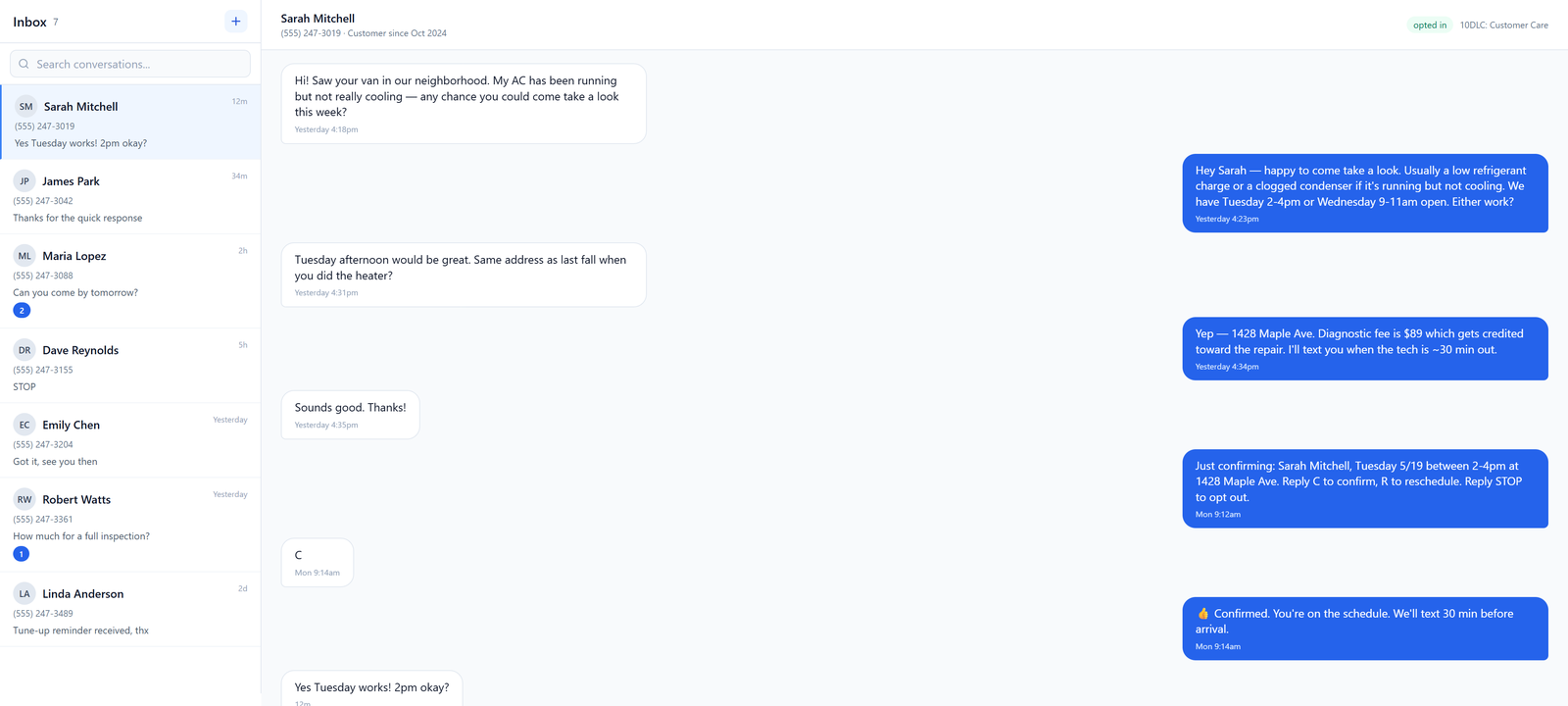
Text N Dial supports this natively on the business phone system, but the principle works on most modern VoIP platforms. The key is using the same number for voice and SMS so the customer's reply lands back in the same thread. If you set this up with a separate texting line, the conversation fragments and you lose the context the original poster's grumpy commenter was complaining about.
After-hours auto-reply
For inbound texts, the rule is: respond instantly, set expectations, give them an action. A workable template:
Thanks for reaching out! We're closed right now (Tue–Sat 9–6). For fastest booking: northside.com/book. I'll reply personally first thing tomorrow morning.
What this does is critical. It tells them you exist, when you'll be back, and offers a self-serve path. About 30–40% of after-hours leads will book themselves through the link and never need a human. The rest you handle Monday — but they're still your lead, not the competitor's.
Booking link that does the qualifying
If your booking page asks for service type, preferred stylist, and a couple of intake notes, the after-hours response becomes a qualifying step instead of a holding pattern. Photos for quote-based services (lawn care, mobile mechanic) can be uploaded right into the booking flow. By the time you read the thread Monday, you have a real appointment instead of a back-and-forth.
The part most guides skip: making sure the texts actually deliver
Here's where 90% of DIY setups quietly fail. You wire up the automation, send yourself a test text, it works. Then a week in you notice replies aren't getting through to certain customers — usually on T-Mobile or Verizon. That's carrier filtering, and it's the rule, not the exception, since 10DLC enforcement tightened.
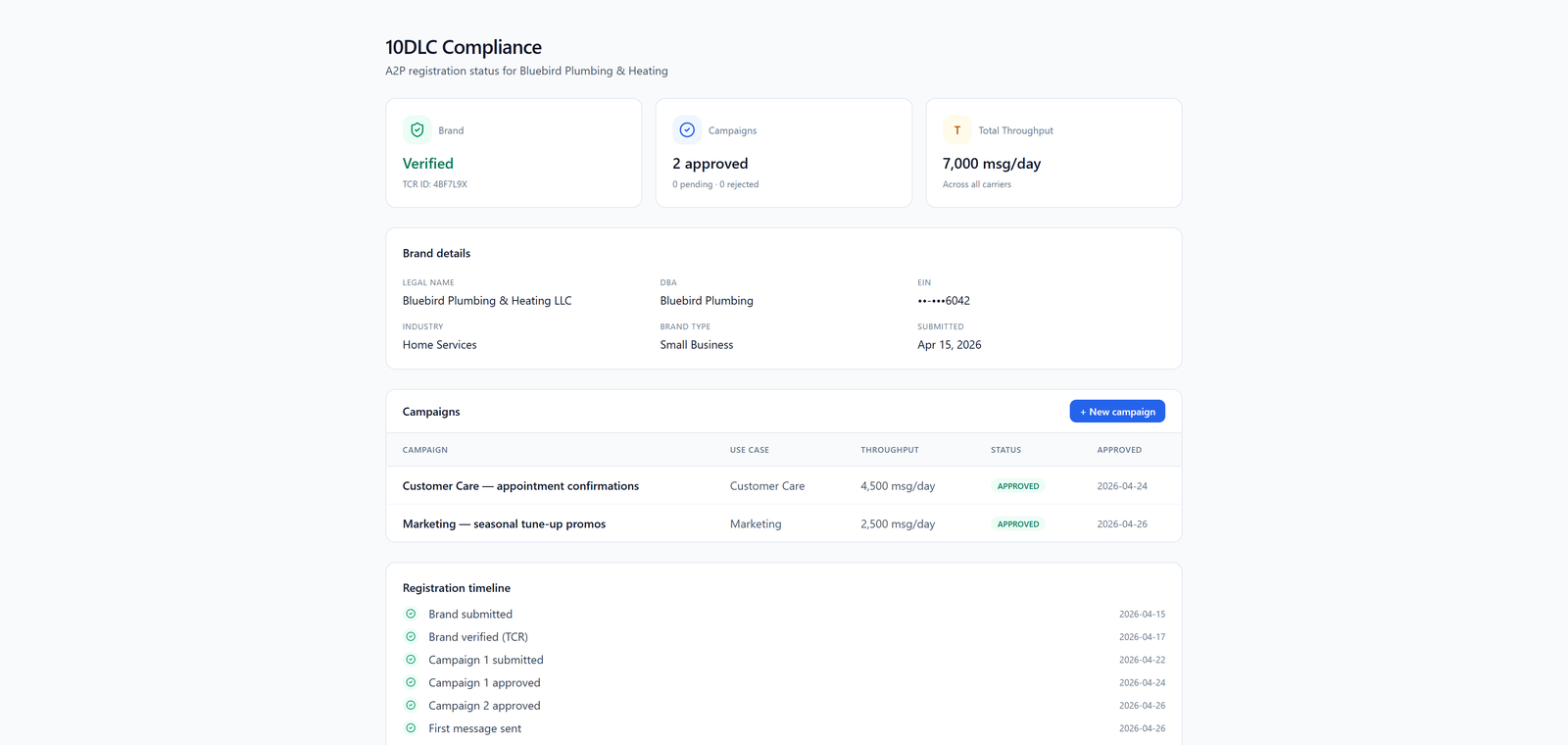
If you're sending business SMS from a US 10-digit number, you need to be registered for 10DLC through The Campaign Registry. That means:
- Register your brand (your legal business entity, EIN, address)
- Register a campaign describing the SMS use case (in this case, customer care / appointment confirmations)
- Match your sending traffic to that campaign
Unregistered traffic gets filtered, throttled, or dropped outright. Some carriers are aggressive enough that even your first auto-reply may never land. We've written more on why business texts aren't going through and the specific carrier SMS approval requirements if you want the detail.
What to tell the registrar
For a same-minute response system, your campaign use case is almost always Customer Care or Mixed (account notifications + customer care). The sample messages you submit should match what you actually send. Include:
- Your missed-call auto-text template
- Your after-hours auto-reply template
- An opt-out line: "Reply STOP to opt out"
- A reference to opt-in (the customer initiated the conversation by calling or texting you — that's the consent basis)
Approval typically takes a few business days. Don't go live until you're approved; the cleanup on filtered traffic is worse than the wait.
TCPA: the consent piece you can't hand-wave
The TCPA framework treats a customer-initiated call or text as implied consent for a reasonable response. Sending one auto-reply with booking info to someone who just called you is well within bounds. What gets businesses in trouble is using that same number list for unrelated marketing blasts later. Keep the same-minute response system scoped to actual inbound interactions, and put a clear opt-out in every templated message.
If you ever want to send broader promotional texts — "holiday hours," "first-time client discount" — that's a separate consent workflow with a real opt-in form. Don't piggyback it on missed-call-text data.
A realistic Saturday flow
Here's what the whole thing looks like when a new lead calls at 11am on a Saturday while you're with a client:
- Phone rings 4 times, no answer, system marks it a missed call.
- Within 5 seconds, the caller gets a text from your business number with a quick apology and the booking link.
- Caller either books a slot directly (best case) or replies with a question.
- Their reply lands in your SMS inbox — same thread, same number, with their caller ID. You see it on your phone between clients and reply in 30 seconds.
- Monday morning: zero ghosts, zero "hey did anyone ever follow up on this?" Slack messages.
None of these steps require AI. They require the right number, the right registration, and templates you actually wrote.
What to do next
If you're starting from a personal cell number or a Google Voice line that can't do business SMS reliably, the first move is getting a proper business number on a platform that supports both voice and registered texting. From there:
- Write your two templates (missed-call, after-hours) today. Don't overthink them.
- Submit your 10DLC brand and campaign. Budget a week.
- Plug your existing booking link into both templates.
- Test from a phone on a different carrier than your own to confirm deliverability.
The businesses winning Saturday leads aren't the ones with better marketing. They're the ones whose phone already replied by the time the customer looked at the next search result.