You've been writing down phone numbers at checkout for months. The list is sitting there. Prom season is coming, alterations are backing up, and you still haven't sent a single text — because nobody told you what to actually send, when to send it, or how to not get yourself in trouble.
This is the playbook. It's built for a formalwear shop, but the logic works for any small retail business where customers buy around an event date.
Start with the moments that already matter
Don't open with a promo. Open with a text the customer is already waiting for. That's how you train your list to actually read your messages instead of swiping them away.
For a formalwear shop, the natural openers are:
- Appointment confirmations — "Hi Maria, confirming your fitting Saturday 2pm at [Store]. Reply C to confirm or R to reschedule."
- Dress arrival alerts — "Your prom dress is in! Come try it on anytime this week, we're open til 8."
- Alteration pickup ready — "Hi Jasmine, your alterations are ready for pickup. We're holding it under your name through Saturday."
- Deadline warnings — "Quick heads up: last week to drop off prom alterations if you need them by April 12."
These feel like service, not marketing. Open rates on this kind of message are absurdly high because the customer asked for the information. Once your list trusts you, then you earn the right to send a birthday offer or a restock alert.
Get the opt-in right at checkout
Here's the part most small shops get wrong, and it's the part that can cost you real money in fines if you ignore it. Just because someone gave you their number to schedule a fitting doesn't mean you can text them marketing.
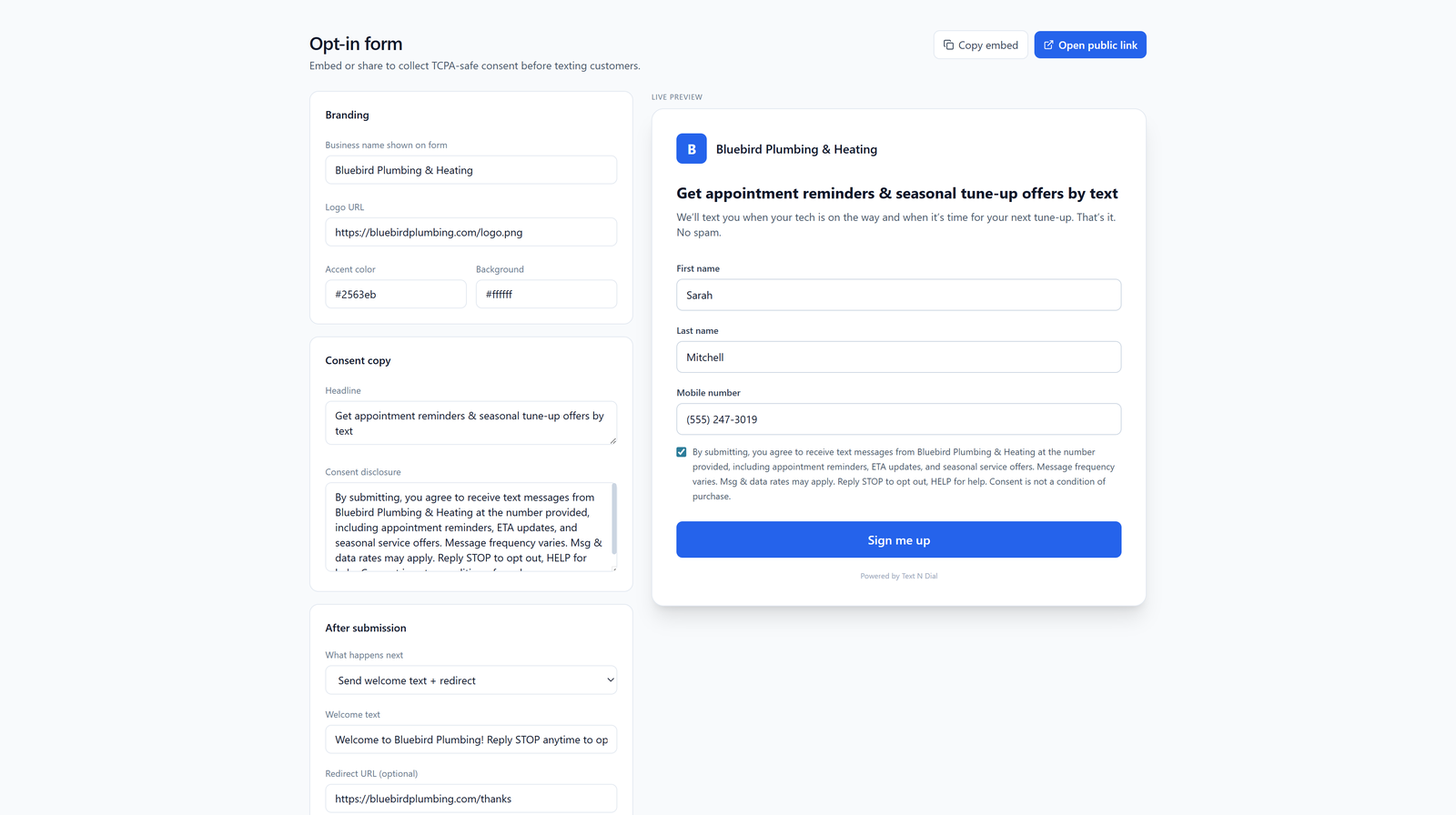
You need a clear, written opt-in for promotional texts. At checkout or at the fitting intake, the form (paper or tablet) should have a checkbox that says something like:
☐ Yes, text me about new arrivals, restocks, and special offers from [Store Name]. Message and data rates may apply. Reply STOP to unsubscribe. Up to 6 messages per month.
Keep transactional opt-in (appointment reminders) and marketing opt-in (promos, birthday offers) as separate checkboxes. A customer who only wanted reminders shouldn't be getting a Black Friday blast. If you want a deeper look at why this matters, the TCPA changes coming in 2026 tightened what counts as proper consent — worth a read before you launch.
Register your business before you send marketing texts
One piece of plumbing you can't skip: carriers require small businesses to register the brand and the kinds of messages you'll send before they'll reliably deliver marketing texts from a regular 10-digit number. This is called 10DLC registration (10-digit long code — the industry name for texting from a normal local phone number). It takes a few days, costs a small monthly fee, and without it your texts get filtered or blocked. Most platforms walk you through it. If you skip it, you'll wonder why your texts aren't going through.
Time messages around event seasons, not the calendar
A generic "20% off this weekend" blast is what kills small retail SMS lists. People opt out because the message has nothing to do with why they gave you their number in the first place.
Instead, segment by event. When you take a customer's info, you already know what they're shopping for — prom, quinceañera, bridal party, mother-of-the-bride, guest dress. Tag it. Then time your messages backward from the event:
- Prom customers — push fittings in January–February, alterations reminders in March, accessory restocks in April.
- Quinceañera customers — color drops 4–5 months before the typical event month, court dress group-booking offers 3 months out.
- Bridal party — sizing deadline reminders, bridesmaid color matching, alteration cutoff dates.
- Last-minute / event guest — "in-stock this week" alerts only, never preorder.
A text that says "new quince colors just dropped in coral and champagne" to a customer whose daughter's quince is in five months is a useful message. The same text to your prom list is spam.
What to actually send, month by month
Keep your sending volume low. Two to four texts per month per customer, max, across both transactional and marketing. Here's a rough cadence that works for most formalwear shops:
Always-on (triggered by customer activity):
- Appointment confirmation 24 hours before
- Reminder 2 hours before the fitting
- Dress-in / alteration-ready notification
- Pickup reminder if it sits more than 5 days
- Birthday offer one week before their birthday
Seasonal pushes (segmented):
- "Fittings filling up for [month] weekends — book now"
- "Last week to drop off alterations before [event date]"
- "New arrivals just landed — first look for our text list"
- "Restock alert: that style you tried is back in your size"
That last one is gold. If your point-of-sale or appointment tool tracks which dresses a customer tried on, a restock text to the three people who almost bought it converts at rates a Meta ad will never touch.
Two-way matters more than blast volume
The single biggest mistake small retailers make: treating SMS like email. Email is one-way. SMS is a conversation. When a customer replies "can I move to Sunday instead?" you need someone to actually see and answer that within minutes, not the next business day.
Pick a platform where your staff can see incoming replies on a shared inbox — phone, tablet, whatever — and respond like they would a text from a friend. If a reply sits for six hours, you've lost the booking. There's a longer write-up on running a service business on SMS without losing the thread that covers the inbox setup side.
Track what's working without buying a dashboard
You don't need attribution software. You need three numbers, written on a sticky note by the register:
- How many texts went out this week (by type)
- How many appointments were booked or confirmed from a text reply
- How many opt-outs (STOPs) you got
If opt-outs spike after a send, that message was wrong for that segment. If bookings spike, do more of that. That's the whole feedback loop. You can get fancier later.
What to do next
This week, do three things:
- Write your opt-in language and add it to your fitting intake form and checkout. Separate checkboxes for reminders vs. marketing.
- Tag every customer in your system by event type and event date. Even a spreadsheet works to start.
- Send your first real text — an appointment reminder to tomorrow's fittings. Just that. Get comfortable.
Marketing texts come after the operational ones earn trust. Get the order right and your list becomes the most reliable traffic driver you own — independent of mall foot traffic, ad costs, or whichever platform's algorithm just changed.