Your client owns a bar. He wants to text regulars about Thursday's tap takeover and Sunday's brunch special — and he wants it nowhere near the point-of-sale system, because the POS is already a tangle of tabs, tips, and reports nobody wants to touch. Fair. You don't need a marketing suite. You need a clean SMS tool that collects numbers legally, sends a promo, and gets out of the way.
This is a buyer's guide written for that exact situation: what to look for, what to ignore, and a sample 30-day cadence that won't burn the list down.
What "separate from the POS" actually buys you
Keeping SMS standalone isn't just a tech preference. It changes who owns the list and how fast you can move.
- The list is yours, not the POS vendor's. If the bar switches POS systems next year, the phone numbers come with you.
- You can text without waiting on POS integrations or seat licenses. No "upgrade your plan to unlock messaging" surprise.
- Cleaner consent records. When opt-ins come through a single signup flow you control, you can prove how someone joined if anyone ever asks.
The tradeoff: you won't get automatic "text this customer after they buy three Old Fashioneds" automations. For a neighborhood bar, that's fine. Most of the value is in scheduled blasts to a list that opted in at the bar or on the website.
Must-have features
Don't get talked into a giant feature matrix. For a bar, the short list is:
Keyword opt-in
A customer texts a word like JOIN to a number and they're added to the list. This is the cleanest consent path because it creates a record — they texted in, on their phone, on their own. Put the keyword on coasters, table tents, the chalkboard, and the website footer. Anything more complicated and signups drop.
A real opt-in form for the website
A web form with a clear checkbox: "Yes, text me drink specials and event invites from [Bar Name]. Message and data rates may apply. Reply STOP to unsubscribe." That language isn't legal theater — it's what keeps the bar out of trouble under the rules that govern promotional texting in the US (the TCPA). If you want the deeper version of why that wording matters, the 2026 TCPA changes post covers it.
Scheduling and time-of-day controls
You want to write Friday's text on Tuesday afternoon and forget about it. You also want a hard rule that nothing sends before, say, 11 a.m. or after 9 p.m. A platform that can't schedule isn't worth using.
Two-way replies
When someone texts back "are you open late tonight?" — somebody at the bar needs to see it and reply. A send-only blast tool will frustrate customers fast. Make sure replies land in an inbox a manager actually checks.
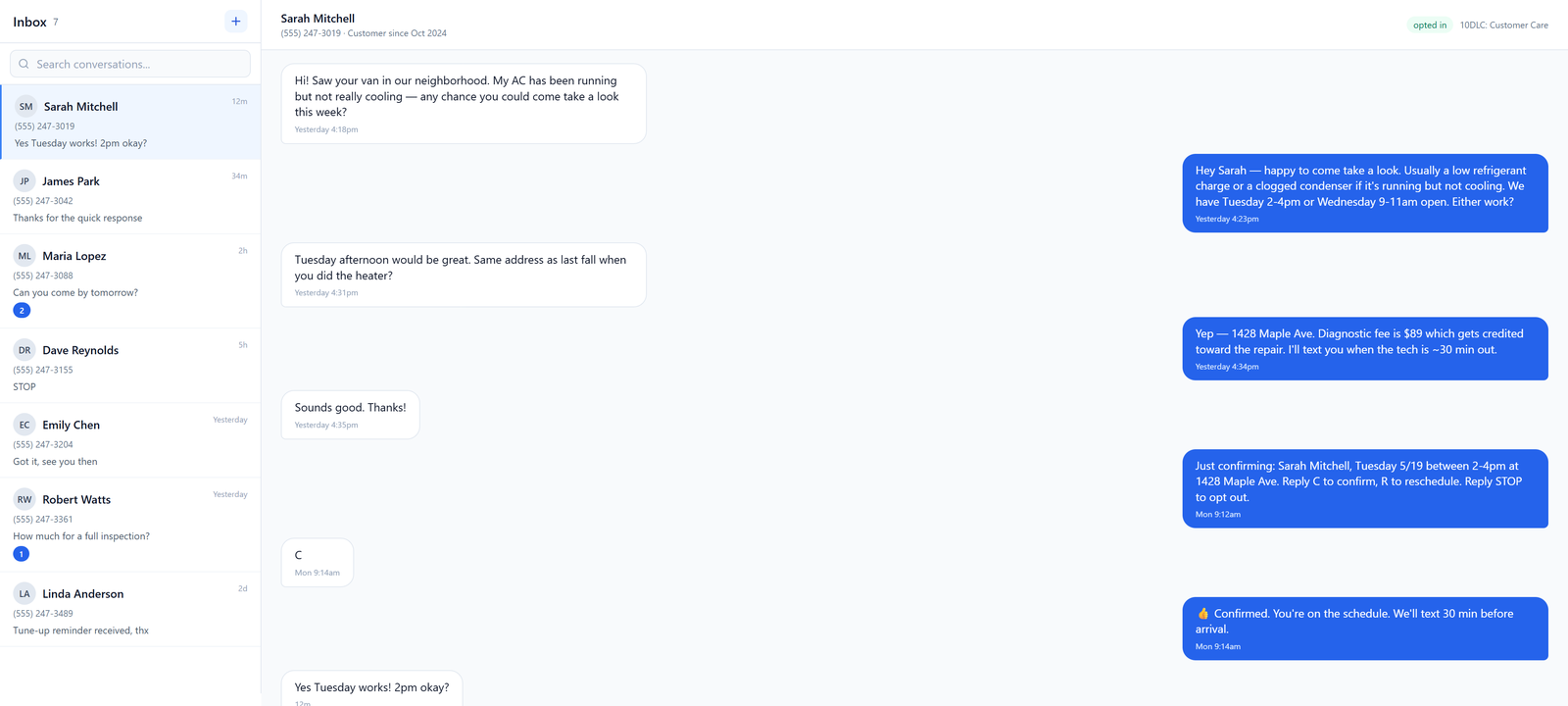
Promotional-message registration handled for you
If you're sending marketing texts from a regular 10-digit number in the US, the carriers require the business to register — this is the rule sometimes called 10DLC (ten-digit long code) registration. Skip it and your messages quietly get filtered or blocked. A good platform walks you through this once and you're done. We broke down what the carriers actually check in the SMS approval requirements post.
Easy unsubscribe and a clean list
STOP needs to work automatically. The platform should also flag dead numbers so you're not paying to text disconnected lines. If the bar's been collecting numbers on paper for a year before you got involved, run a list cleanup pass before the first send.
What to avoid
- All-in-one marketing suites that bundle SMS as a side feature. You'll pay for email, CRM, landing pages, and pipelines you don't need. The bar wants to text people.
- Platforms without clear pricing. If you have to "book a demo" to see what 2,000 messages a month costs, move on. Transparent per-message pricing is normal now.
- Anything that requires uploading a list with no proof of consent. That's a fast path to carrier blocks and complaints.
- Shared short codes. They're being phased out and the deliverability is unreliable. Use a dedicated number registered to the bar.
- No opt-in form builder. If you have to hand-code a signup form, you'll never ship it.
If you're advising a client in a different vertical, the same principles apply but the cadence shifts — here's how a seasonal formalwear shop can structure its SMS program around appointments and alteration pickups.
A 30-day text plan that won't get muted
The single biggest reason bar texts get muted: too many, too generic, too predictable. Two to four messages a month is the sweet spot. Every text should make someone think "oh nice" — not "again?"
Here's a sample month for a neighborhood bar:
Week 1 — Wednesday, 4:30 p.m.
Half-off espresso martinis tonight at [Bar]. 6–9 only. First 20 get a free chocolate. Reply STOP to opt out.
Week 2 — Friday, 3 p.m.
Saturday: new tap list drops at noon. 4 local breweries, one is a surprise. Show this text for $1 off your first pint.
Week 3 — Thursday, 5 p.m.
Trivia is back next Tuesday 7pm. Teams of 4 max. Winning team gets a $75 bar tab. Want us to hold a table? Just reply.
Week 4 — Sunday, 10 a.m.
Bottomless mimosas today til 2pm, $18. Bring a friend who hasn't been in — both of you get a free pastry.
Four texts. Each one is short, specific, time-bound, and offers something the customer can't get by walking in cold. Notice what's missing: no "hey valued customer," no logo, no five-line footer. That's the point.
A few things people forget
Ask for the ZIP code or birthday at signup
One extra field at opt-in unlocks better targeting later. Birthday texts ("come in this week, drink's on us") get the highest response rates of anything a bar will send.
Don't text during the lunch rush of other businesses
4–6 p.m. on weekdays and mid-morning on weekends are your friends. Late-night sends feel desperate and get muted.
Keep a paper backup of who opted in at the bar
If someone signs up on a clipboard at the host stand, snap a photo of the page before you key those numbers in. You want to be able to show consent if a complaint ever lands.
Use one number, consistently
Don't text from one number this month and a different one next month. Customers won't save you in their contacts and your texts will look like spam. If you need help thinking through numbers and what shows up on caller ID, that's a separate but related rabbit hole.
What to do next
- Pick a platform with transparent pricing, keyword opt-ins, scheduling, and two-way replies. Skip the marketing suites.
- Get the bar a dedicated number and register it for promotional messaging before the first send.
- Build one opt-in keyword and one web form. Put the keyword on every surface in the bar.
- Write the first month's four texts before you launch — don't improvise weekly.
- Check open rates and unsubscribes after 30 days. If unsubs are above 2% per send, you're sending too often or being too generic.
The bar doesn't need clever. It needs consistent, short, useful texts to people who asked for them. That's the whole game.