You don't lose customers because your prices are wrong or your work is bad. You lose them because the phone rang and nobody picked up. The worst part: you never hear about it. The caller just dials the next name on the list and forgets you existed.
This post is about finding that leak and patching it. No fancy gear. No new staff. Just an honest look at what's slipping past you.
Start with a 30-day phone audit
Before you buy anything or change anything, you need to know what you're actually losing. Most owners guess. Guessing is how this problem stays invisible.
Grab a notebook or a spreadsheet. For the next 30 days, log every incoming call you didn't answer in real time. Four columns:
- Date and time
- Number (or "unknown")
- Did you call back? How many hours later?
- What came of it? (new job, existing customer, spam, dead end)
That's it. No app required. If your current phone setup gives you a call log, even better — export it and sort.
At the end of the month, separate the misses into four buckets:
- Spam and sales calls you screened on purpose
- Existing customers who got handled another way (text, email, walk-in)
- Dead numbers and wrong dials
- First-time callers with no prior relationship
Bucket four is the one that matters. Those are strangers who picked up the phone specifically to give you money. Count them. Then count how many turned into actual paying work.
Most owners running this audit for the first time are quietly horrified.
Why callback speed beats everything else
Here's the brutal math. A first-time caller has a problem right now. A clogged drain. A wedding next month. A leaking roof. They are not loyal to you. They have a phone and a list of three businesses.
Whoever calls back first usually wins. Not the cheapest. Not the best-reviewed. The first.
Four days later, when you finally return their voicemail, they don't remember calling you. They aren't mad. They aren't rejecting you. They already hired the next person on the list and moved on. You weren't beaten. You were absent. You can't compete with absent.
This is why a same-day callback — even a rough one — is worth more than a polished response a week later. We wrote more on this in same-minute response after missed calls if you want the longer version.
Three patches that actually stick
After you've done the audit, the temptation is to install a whole new system. Don't. Start with the smallest fixes that close the biggest hole.
1. Auto-text-back on every missed call
This is the single best change most small businesses can make. The moment a call goes unanswered, your phone system sends the caller a text: "Hey, this is Mike at Mike's Plumbing — saw your call, in a job right now, what's going on?"
That text does three things. It tells the caller you exist. It opens a conversation they can answer on their own time. And it stops them from dialing the next business while they wait. We have a full breakdown on missed call auto-text-back for leads if you want to see how it's set up.
2. Shared answering across your team's cell phones
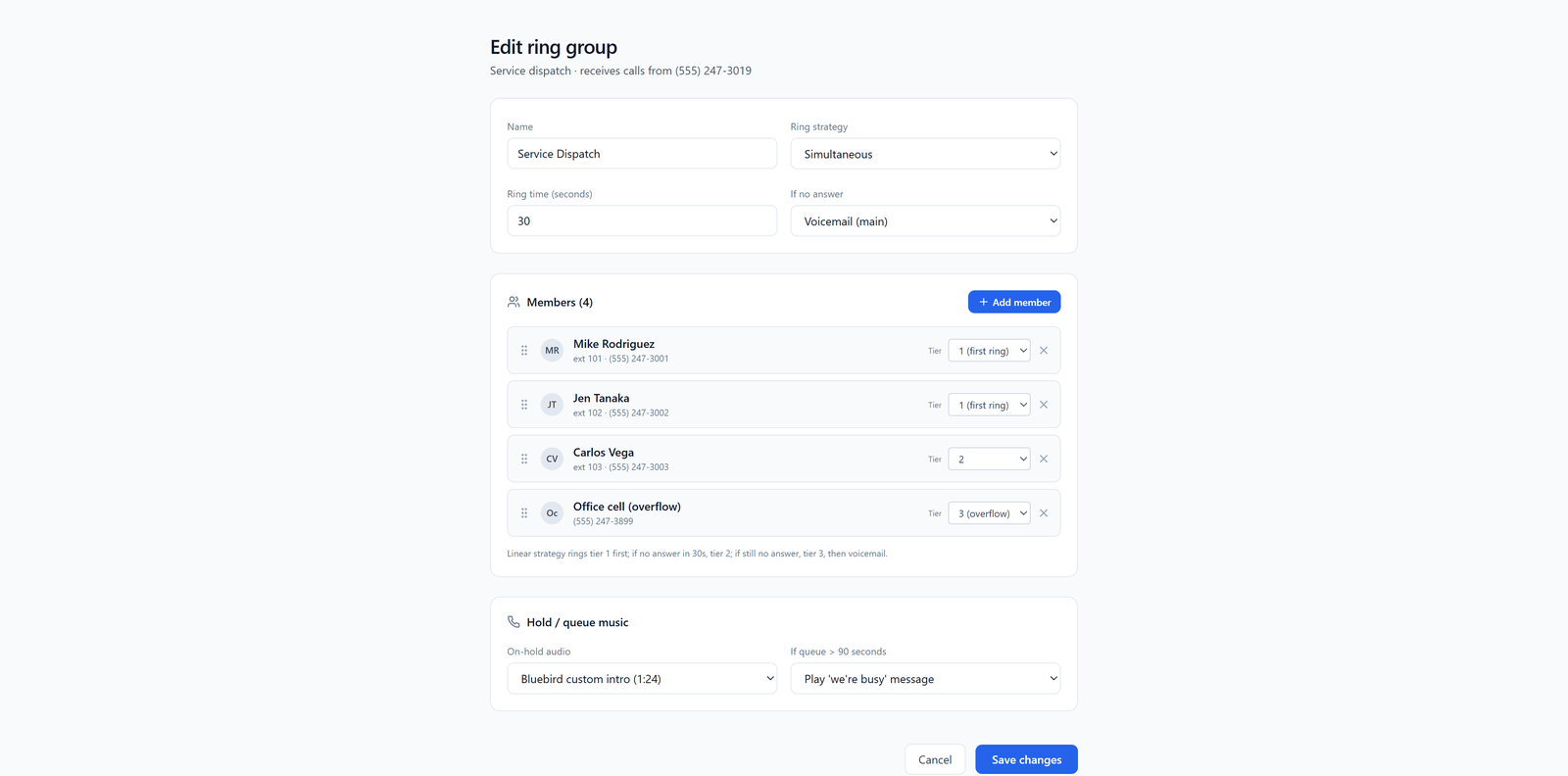
If you have two or three people who could pick up a customer call, you shouldn't be the only line of defense. A modern business phone setup lets the same business number ring on multiple cell phones at once. First to answer wins. Nobody has to give out their personal number.
This is not a desk phone thing. It works on the cell phone already in your pocket. There's a walk-through here: your business number rings on your cell.
3. Voicemail-to-text so you actually read the messages
Nobody listens to voicemail anymore. Not your customers, and honestly, not you. 34 unread voicemails from February is normal, not unusual.
Fix it by having every voicemail transcribed and sent to you as a text or email. You'll skim it in five seconds at a red light. That's all it takes to know whether to call back in two minutes or two hours.
A simple flow that catches every call
If you build nothing else, build this:
That's the whole game. Multiple people get a shot at the live call. If they all miss it, the caller still gets a response in under a minute — by text, which they prefer anyway. And you see the transcript without having to dial in to a mailbox.
What about after hours?
The audit usually shows that a chunk of missed calls came in evenings, lunch, or weekends. You don't need to staff those hours. You need to acknowledge them.
An after-hours greeting plus an auto-text gets you 80% there. The caller knows you're closed, knows you saw them, and has a way to leave details. We covered the wording and timing in after-hours auto-reply without training customers.
For solo owners who can't ever fully unplug, there's also the option of having calls screened and summarized — see solo owner phone setup.
What to do this week
You don't need to overhaul anything yet. Do these four things in order:
- Check your voicemail today. All of it. Count how many unheard messages are from real prospects.
- Start the 30-day log. Even if you only do it for two weeks, you'll see the pattern.
- Turn on auto-text-back. This alone will recover calls you're losing right now.
- Add a second person to the ring. Your spouse, your shop manager, anyone who can take a name and number.
The owner who runs this audit honestly almost always finds the same thing: the leak isn't a few hundred dollars a month. It's thousands. And it's been quiet the whole time.
Go check your voicemail.